






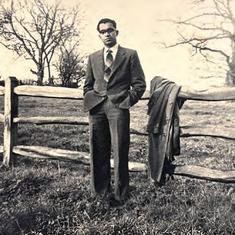
In July 1962, Rustom Sheriar Palang, an Iranian citizen living in Maharashtra, approached the Indian government with a request that was both personal and practical. He wanted to entrust his home and restaurant in Dahanu to his younger brother, Ardeshir. A member of the Irani Zoroastrian community, Palang had no son and his brother, who had come to India as a student a decade earlier, seemed the natural successor.
After considerable deliberation, the Home Ministry denied the request. The reasoning reflected a broader concern: the “presence of a large number of Iranians, particularly in Bombay”, the government felt, was “adversely affecting the interests of Indians”.
Around the same time, a similar request from one Pashotanzadeh to take over his elder brother’s business was approved by the Indian government. The difference lay in the details. The elder brother had agreed to return to Iran after handing over his business. “If we allow Mr. Pashotanzadeh to stay on in India, the number of permanent foreign residents here will not increase,” the Ministry of External Affairs noted in a memo.
Such cases were part of a bigger pattern. India was handling numerous applications from Iranian nationals seeking to remain in the country indefinitely, sometimes responding with a measure of flexibility.
At the same time, the visible presence of Iranians in Bombay was beginning to generate concern at the state level. Authorities in the newly formed state of Maharashtra conveyed this unease to the Ministry of External Affairs.
“It has been repeatedly brought to our attention by the Government of Maharashtra, that the presence of such a large number of Iranian nationals, particularly in Bombay, is adversely effecting [sic] the interests of Indians,” Fateh Singh, joint secretary in the Ministry of External Affairs, wrote in a note dated July 17, 1962.
The numbers themselves were relatively modest. Around 4,568 Iranians lived in India, while fewer than a thousand Indians resided in Iran. Under the Pahlavi regime, which had consolidated power after the 1953 US- and UK-backed coup that overthrew Prime Minister Mohammad Mosaddegh, Iran was considerably wealthier than India. Yet it was not a destination that attracted many Indian migrants.
Part of this imbalance stemmed from New Delhi’s relatively liberal visa policy. “Our greatest difficulty is that even Iranian nationals who came to India for the specific purpose of studies stay on to enter business or take up some other work,” Singh cautioned. “If we go on allowing such foreigners to settle down in India, this will be at the cost of our own nationals.”
Immigration was a sensitive issue in newly independent India, as the economically weak country was grappling with the needs of its impoverished population. Even if the number of Iranians seeking to settle in India was small, the growth of a foreign diaspora less than two decades after independence was bound to generate unease, particularly in Maharashtra, where anti-outsider sentiment would culminate in the formation of the Shiv Sena in 1966.
‘100% democratic’
After independence, the Indian government was cautious about encouraging permanent immigration. “Our policy in regard to permanent immigration...is generally restricted,” K Sivaraj, deputy secretary at the Ministry of External Affairs wrote in a memo dated August 31, 1962. “Even visas are granted only in cases which will promote the national interest as in the case of technicians, etc.”
At the same time, visas were more than administrative tools. The External Affairs Ministry treated them as instruments of diplomacy, a form of leverage for building and maintaining relations. Under Jawaharlal Nehru, India used this approach to strengthen its civilisational ties with Iran.
In September 1962, Farhad Massoudi, described by The New York Times as “Tehran’s most influential editor”, visited India at the government’s invitation. Observing parliamentary proceedings, he was struck by Nehru calmly answering questions from angry opposition members. Writing in the daily Ettela’at, Massoudi praised what he saw as India’s “true democracy”: “I saw the dignified and glittering face of Mr. Nehru in the Indian Parliament, where he was replying firmly and coolly to severe attacks made by the opposition.” In Massoudi’s view, “India amongst all under-developed countries of the world” was “the only 100 per cent democratic state”.
Such positive coverage was welcomed in New Delhi, especially as Tehran’s close ties with Pakistan had complicated India’s efforts to build a closer relationship with Iran.
PAV Pillai, an attache with the External Affairs Ministry, argued that India’s visa policy should take these sensitivities into account. A stricter approach, he warned, could prove counterproductive. “Any large number of Iranian nationals returning to their country with a tale of woe about them may cause ill-feelings among the Iranian people and offset the efforts made by us to improve our relations with Iran,” Pillai wrote in a memo.
Others were less convinced. While Sivaraj acknowledged that some “latitude in the visa policy is required” to improve relations with Iran, he questioned liberalising the immigration policy. “The prime question for consideration would be whether a liberal permanent immigration policy is at all necessary as a sine qua non [essential condition] for our maintaining or improving our relations with foreign countries,” he said. “What we might otherwise gain in rejecting such visas may not be commensurate with the repercussions such a policy may have on the relations between the two countries.”
He also pointed out that few countries at the time actively encouraged permanent immigration. “It is one thing to treat foreign nationals already in this country who had expected all these years to be permanent residents of this country on a liberal footing, but quite another to pursue indefinitely in the future an open door policy of inviting foreign nationals to this country for permanent immigration just to improve our mutual relations.”
Financial strain
Another factor shaping policy was reciprocity. While India’s approach was relatively accommodating, Iran maintained stricter rules for foreign nationals, including Indians.
“The policy of the Government of Iran in granting residential and work permits to Indians...is unsympathetic,” Jayaraj wrote. New arrivals were rarely allowed to stay and work, and the costs were significant – Rs 198.98 for a permit and Rs 95.24 annually for renewal. Indians in Iran faced higher charges than other foreigners and had to renew permits every six months rather than annually.
In contrast, Iranian nationals in India were neither required to obtain separate residential or work permits beyond their visas nor did they have to pay additional fees.
In October 1962, the Ministry of External Affairs noted that the Indian community in Iran felt “a sense of insecurity” and faced financial strain “not only because of the higher fees for the grant of these permits but also because of the necessity to pay large amounts of bribe to the local officers to get the issue of these permits expedited”.
When the Indian embassy first raised the issue with the authorities in Tehran, it was informed that special legislation would be required to relax work permit rules for Indians. Although verbal assurances were offered, archival documents from the Ministry of External Affairs indicate that no concrete steps followed.
Against this backdrop, the Ministry of External Affairs clarified its position. It wrote to the Indian ambassador in Tehran, Mirza Rashid Ali Baig, stating that India did not encourage foreigners to settle permanently, set up new businesses or take up petty employment. “We are, however, allowing the proprietors etc., of Iranian firms established in India to bring out any one of their close relatives if his services are essential for the efficient running of their business,” the note said.
The Home Ministry too tightened rules, making it clear that tourists and students would no longer be allowed to change their visa status while in India.
Over time, the situation evolved. As Iran grew wealthier due to oil revenues, fewer Iranians sought to remain in India for business purposes. Meanwhile, many second-generation Iranians born in India became citizens by birth, as those born on or after January 26, 1950 were granted citizenship (a provision later amended). Yet the story did not end there. In 1980, Maharashtra received over 200 applications for the renunciation of Indian citizenship from individuals of Iranian origin who were Indian by birth – they all sought to adopt Iranian nationality.
Ajay Kamalakaran is a writer, primarily based in Mumbai. His latest book, Colombo: Port of Call, has been published by Penguin Random House.
